Small Business Dispatch Software: Assign Routes Without a Spreadsheet
How small delivery teams replace group-chat dispatch with one board.

Route Planning
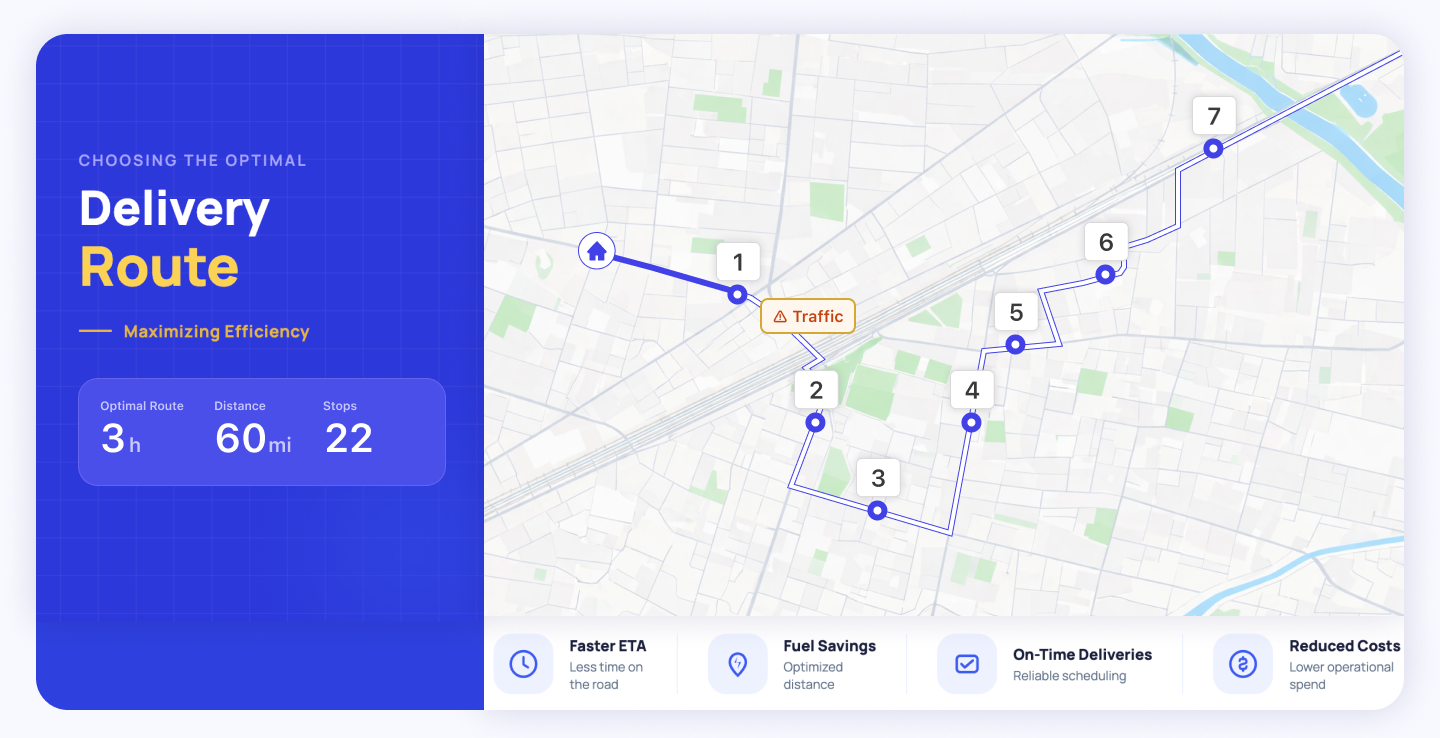
At 6:15 on a Tuesday, Marcus has forty-one orders and three drivers. He has done this for two years, and he is good at it: he knows which streets back up after eight, which building needs the freight elevator booked, which customer will call if the driver rings the wrong bell.
All of that lives in his head. Which is fine, right up until the Tuesday he is sick.
That is the real thing a last mile delivery platform is bought for. Not a percentage of saved miles — the removal of the single point of failure standing between a stack of orders and a finished delivery day.
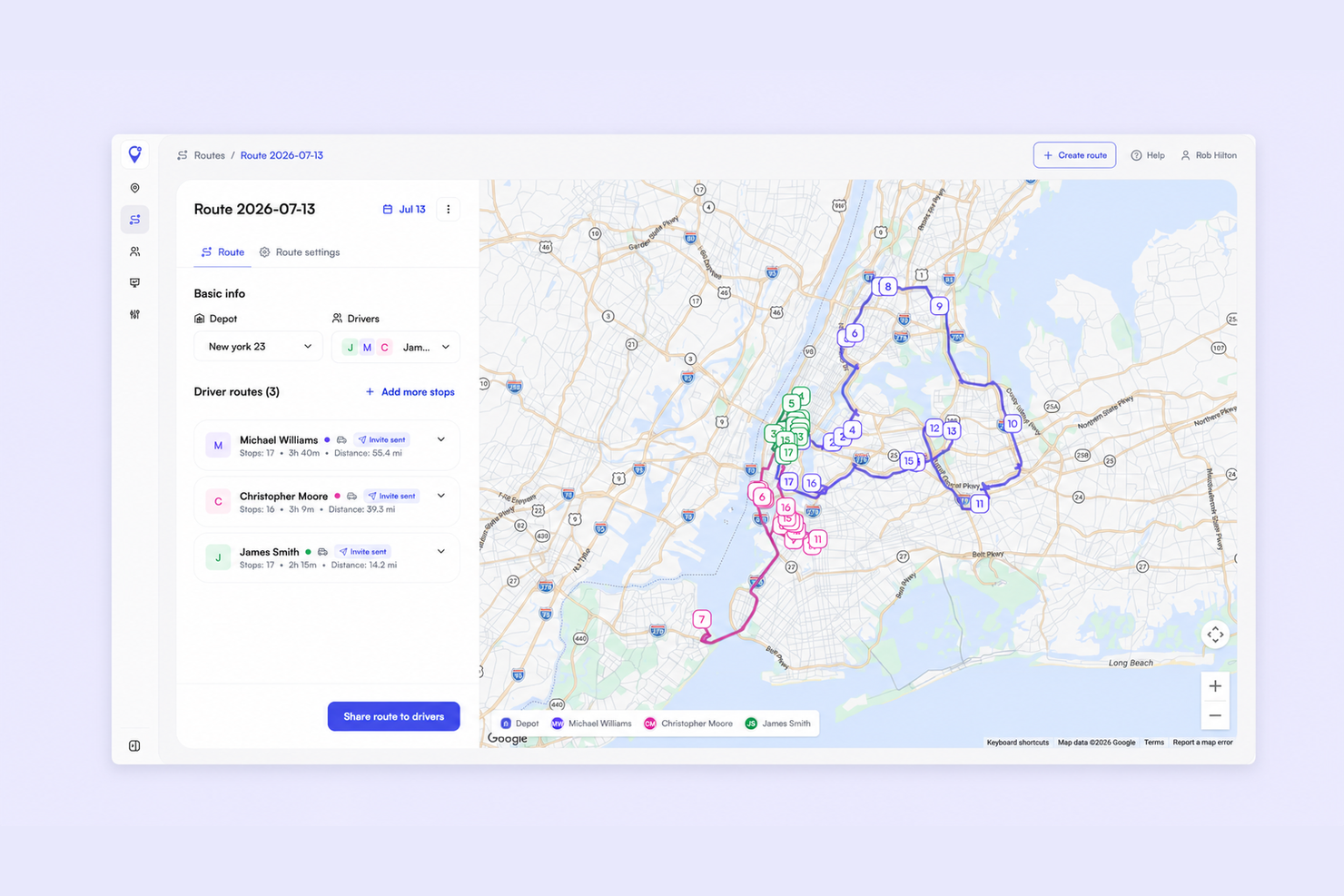
Every operation that outgrows manual dispatch is doing the same four jobs by hand, usually all through one person. A last mile delivery platform absorbs all four of them.
None of these is dramatic on its own. Together they are the reason a five-driver operation needs a Marcus, and the reason it stops needing one. If you are still deciding which half of the problem to solve first, dispatching vs routing is the argument in full.
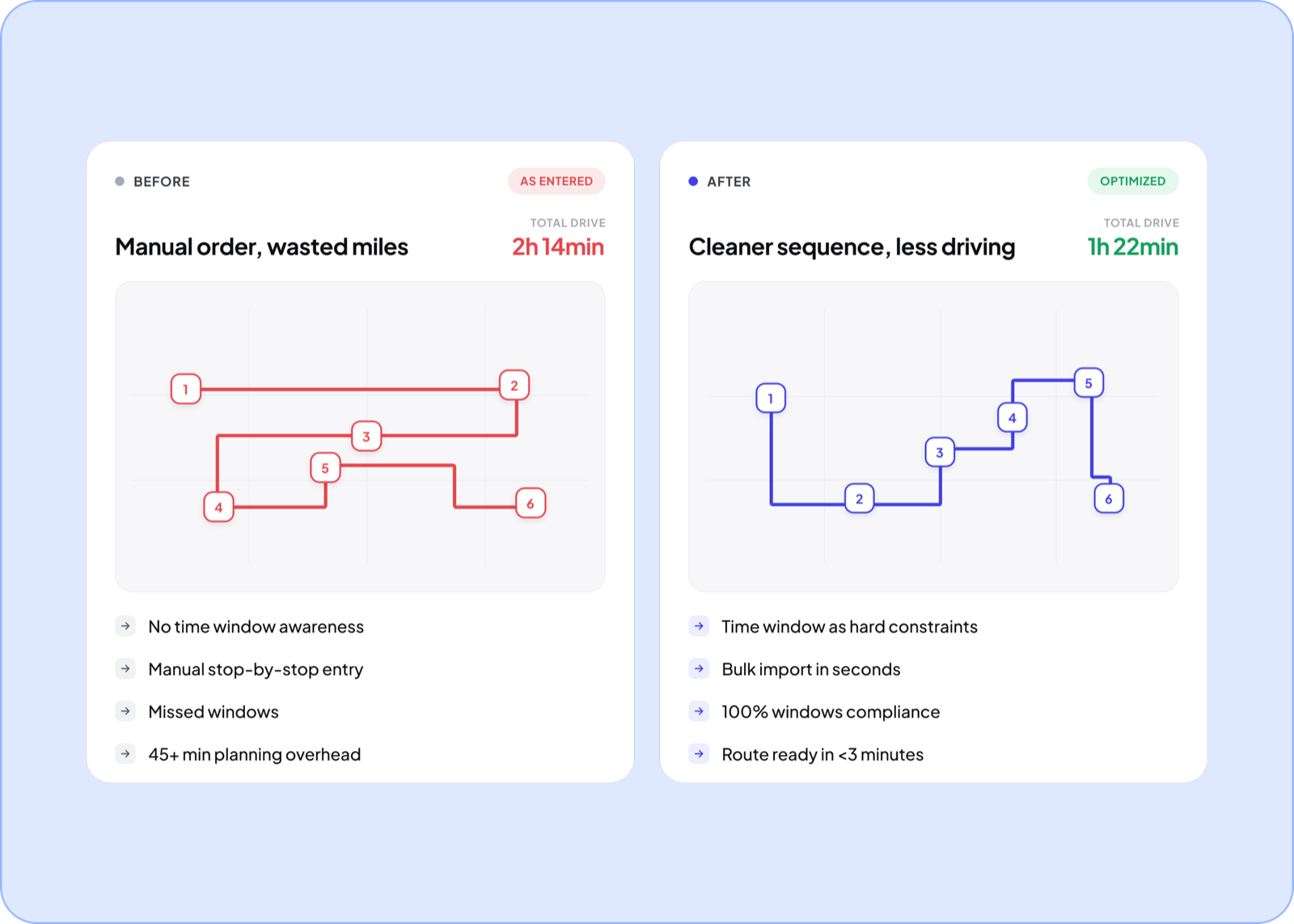
Every vendor leads with optimization, and the maths is real: tighten the sequence across forty stops and you get back fuel, overtime, and roughly an hour of somebody's evening. But optimization alone is an engine, not a vehicle.
What separates last mile logistics software from a route planner is everything that happens after the route exists. Does it reach the driver without a forwarded link? Does the dispatcher see it running, or only find out at 4 p.m.? Does it survive a rush order at eleven, or does the morning's work get rebuilt from scratch?
Optiway sequences up to 200 stops per route, honours time windows and stop priorities, reads a CSV or Excel file as it is, and re-optimizes mid-shift when an order lands. The route optimization engine is the part everyone benchmarks in a demo. It is almost never the part that decides the purchase three weeks later.
Ask an operations manager what went wrong last week and the answer is never “the sequence was four percent suboptimal.” It is that a delivery was late and nobody knew until the customer called, angry, at 3 p.m.
This is where dispatch management software earns its price, and where a dispatch platform stops being a nice-to-have. Live tracking shows which stops are done and which are drifting, so a delivery can be moved at noon instead of explained at five. Recipients get ETA notifications by SMS or email and a branded tracking page — which quietly removes most of the inbound “where is my order” traffic before it reaches a human.
Proof of delivery closes the loop at the door: a photo, a signature, or a written note attached to the stop. For anyone running client contracts, that record is the difference between issuing a credit note and ending the conversation in one message.
Pricing in this market comes in two shapes, and the shape matters more than the number on the page.
As a delivery management system, Optiway prices by monthly stops instead: Early Access is free with 300 a month and Team is $99 with 2,000, whatever the size of the team. Routes themselves are unlimited, and running out of allowance pauses new stops until the month resets rather than adding to the bill. The full grid is on Optiway pricing.
Before comparing numbers, work out which meter fits your shape. Five busy drivers and twenty occasional ones produce wildly different invoices on the same platform — and the cheaper sticker is often the more expensive year.
Feature lists converge. Behaviour under load does not. Load one real day into any shortlist — a bad day, not a tidy one — and watch four things.
Most trials stall at import, so start there: route planning software with CSV and Excel import should read the file you already keep, not demand you rebuild it into somebody's template first.
What is a last mile delivery platform?
Software that turns orders into sequenced routes, assigns them across drivers, tracks delivery in real time, and captures proof at each stop. The category covers route optimization, dispatch, a driver app and recipient notifications as one system rather than four separate tools.
How is a delivery platform different from a route planner?
A route planner solves the sequence for one driver. A platform adds the operation around it: assignment across a fleet, live visibility for the dispatcher, notifications for the recipient, and a delivery record afterwards.
What does last mile delivery software cost?
Vendors price either per driver or per monthly stop volume. Optiway prices by volume: free for the first 300 stops a month, then $99 a month for 2,000, with no per-driver charge at all.
Do drivers need a separate app?
Assigned routes are pushed to the driver's mobile app, with one-tap navigation into Apple Maps, Google Maps, or Waze. There is no hardware to buy, and the app is included with the plan.
The decision is rarely about optimization percentages. It is whether tomorrow still depends on one person remembering which building needs the freight elevator.
Import tomorrow's orders, split them from one board, and watch a delivery day run without a single forwarded screenshot. Start your free trial.
Small Business Dispatch Software: Assign Routes Without a Spreadsheet
How small delivery teams replace group-chat dispatch with one board.
Route Planning Software with CSV & Excel Import
Import stops from a spreadsheet and schedule optimized routes in seconds.
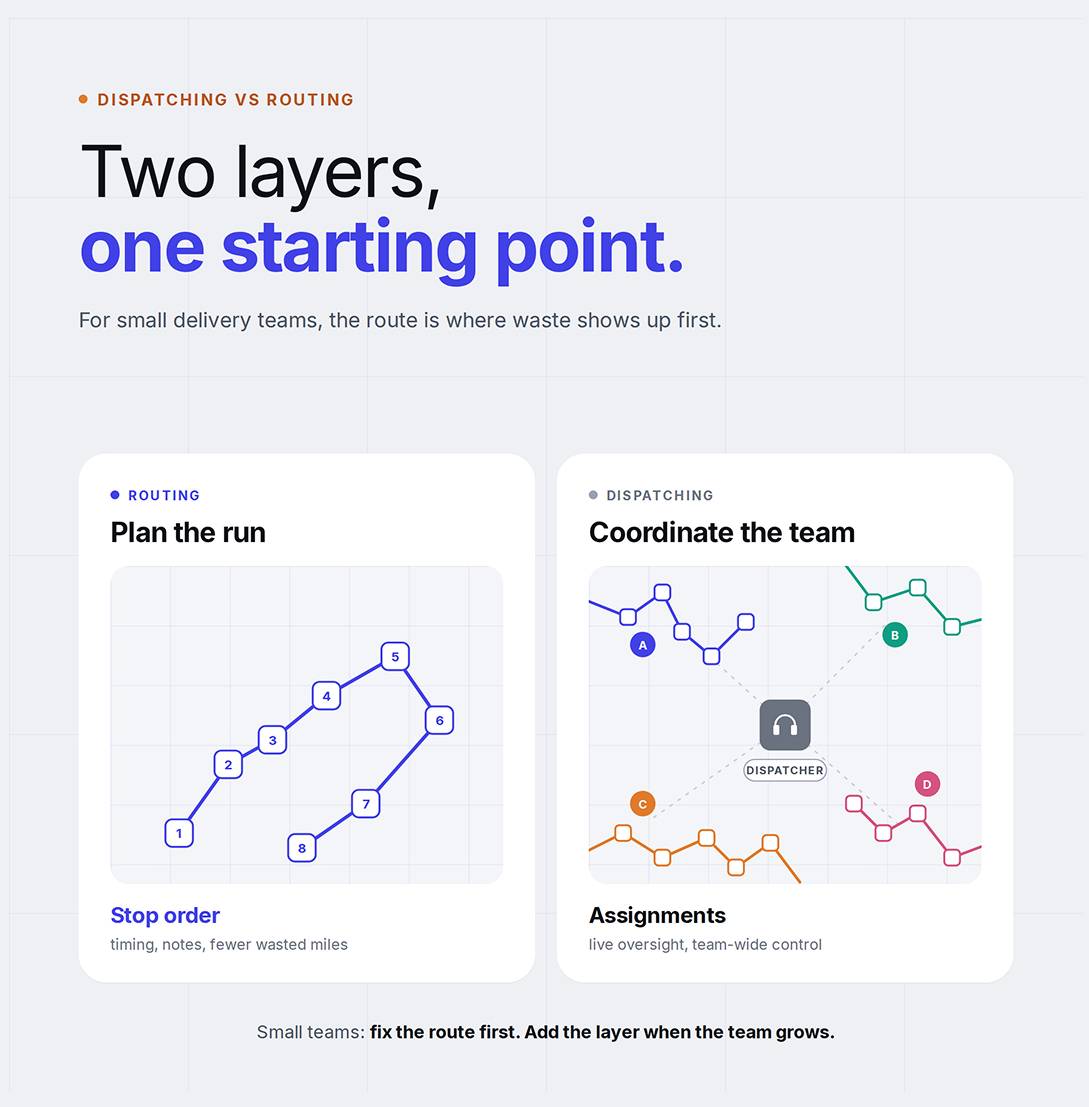
Dispatching vs Routing: Why Small Delivery Businesses Start With Route Optimization
Which half of the problem to fix first.
Plan, assign and track every driver — live, from one dashboard.