OptimoRoute Alternatives: Optiway vs OptimoRoute
A feature-by-feature comparison of pricing, analytics, dispatch and proof of delivery for growing delivery teams.

Route Planning
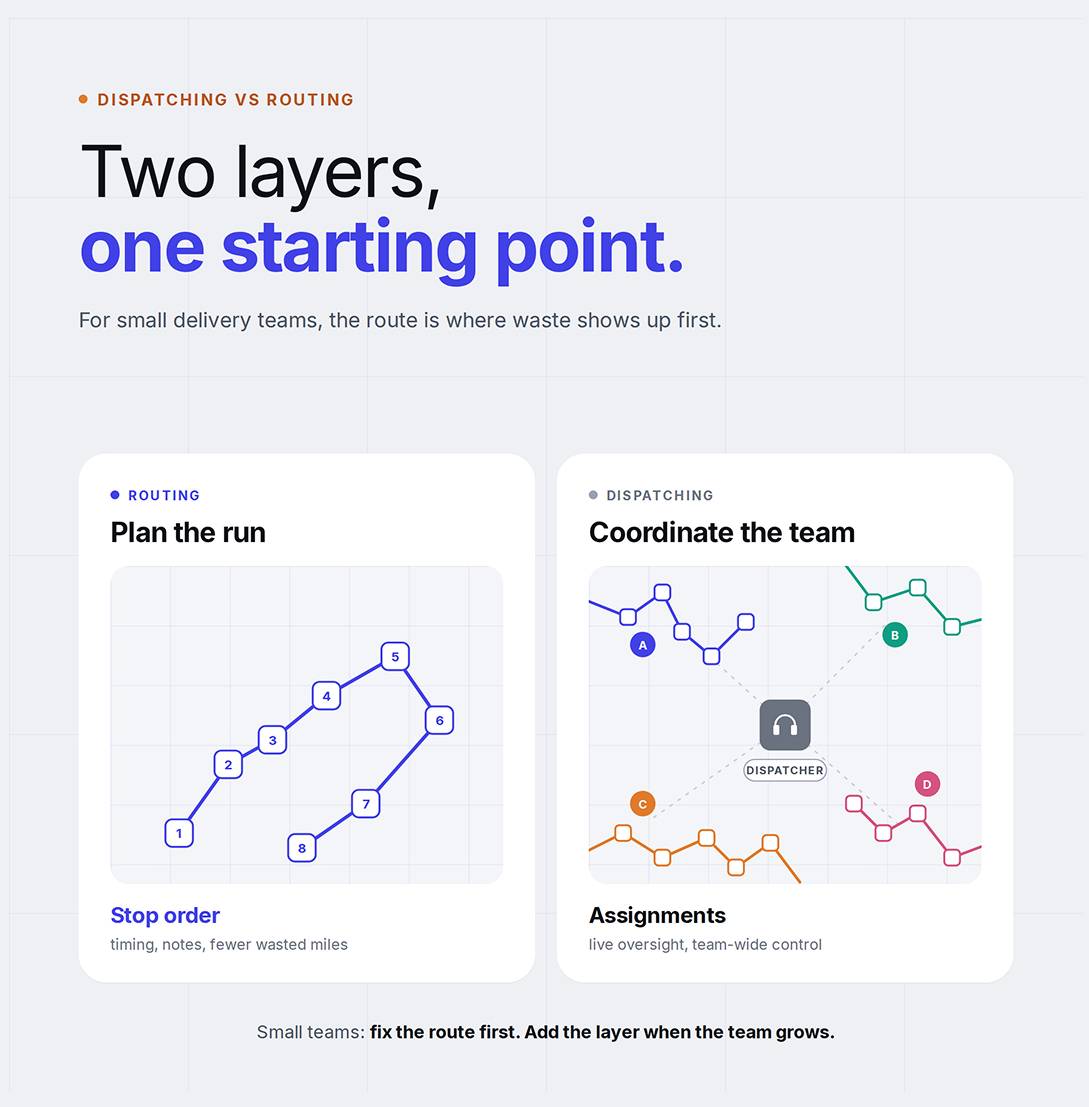
When people compare dispatching vs routing, they often treat both as equally urgent. On paper, that sounds sensible. In practice, many small delivery businesses feel the pain in one place first — the route itself. SmartRoutes frames routing and dispatch software as a combined solution for operations dealing with late deliveries, manual planning, time windows, and last-minute changes. That logic is real. Delivery work does get messy fast. But the first software problem is not always dispatch. Very often, it is simply that the stop order is weak, the day is overpacked, and too much time disappears between doors.
This is the shift Optiway is built to support. Optiway gives the tools to plan smarter routes, assign work with clarity, and adapt quickly as the day unfolds. From faster multi-stop route planning and bulk address import to notes, priorities, time windows, stop-by-stop ETAs, and real-time route edits, Optiway is designed to keep operations efficient, flexible, and easy to manage.
In broad industry terms, routing is about building the best possible sequence for a set of stops. The SmartRoutes article defines routing software around the route itself: distance, timing, and the most efficient plan from stop to stop. Dispatching is a different layer. It is about operational coordination once work needs to be pushed outward and managed at a broader level. Many platforms combine both functions, which is why the terms are often blurred together in vendor content.
That blur is exactly why the dispatching vs routing question matters for smaller operators. If you are a solo driver, an owner-operator, or part of a small team where each driver handles their own run, the route is usually the first bottleneck worth fixing. Optiway, built for delivery drivers and local businesses, works for solo drivers and small teams and is designed so each driver creates and manages their own route. That makes route optimization the natural starting point for this audience.
The biggest route problems tend to be painfully ordinary. Stops are entered in the wrong order. A few addresses are far enough apart to create pointless zigzags. One stop needs to be earlier than the others, but the route does not reflect that. A building needs a gate code, but nobody wrote it down. Those problems do not require a bigger operations layer first. They require a better route: faster planning, reduced drive time, one-tap navigation, file import, notes, time windows, and stop priority.
SmartRoutes is right about one thing that still matters here: manual planning starts to break down as delivery work grows. Its article argues that software becomes more important as stop counts rise and last-minute changes pile up. For a small business, though, that does not automatically mean jumping into dispatch workflows. It usually means solving the route first so the day stops bleeding time in obvious places.
A weak stop sequence can make a ten-stop route feel like fifteen. The driver crosses town twice, misses an easy cluster, arrives too early at one address and too late at another, then spends the rest of the day catching up. That is a routing problem, not a dispatching problem. Optiway is built for multi-stop route optimization, and it automatically reorders stops into a more efficient sequence than a basic map app would. It also supports up to 200 stops per route, which makes route shape even more important once the day gets dense.
This is why the dispatching vs routing decision often becomes simpler once you look at the actual pain point. If the business already knows who is driving and the work is not being centrally assigned across a large operation, then the route itself is the obvious place to start. Better sequencing can cut wasted miles, lower fuel use, and make the whole run feel calmer without adding a heavier management layer. Optiway helps teams reduce drive time, plan faster, and improve day-to-day delivery flow from the very first stage of optimization.
Small delivery businesses often run into timing problems before they run into coordination problems. A florist has a narrow drop-off window. A grocery driver needs certain stops earlier in the run. A local service business needs a cleaner route order to keep the day on schedule. These are route-timing problems.
Optiway is built to help solve them at the planning stage. It supports earliest and latest times for stops and factors those time windows into route optimization. It also provides stop-by-stop ETAs, so timing is based on the actual route rather than guesswork.
That matters because timing pressure is often what pushes businesses to look for better software in the first place. Missed time windows and last-minute changes create daily friction fast. For many small teams, the first real improvement does not come from adding a full dispatch layer. It comes from building better routes from the start.
Delivery days do not stay fixed. A stop gets added. One is removed. A customer asks for a different time. A driver wants to preserve the current order instead of rebuilding the full route. Flexibility matters because real delivery work changes throughout the day.
Optiway handles that in a route-first way. Users can edit a route that is already underway, add a stop, remove or update stops, and then either re-optimize or keep the existing order. That gives solo drivers and small teams a practical way to manage route changes without adding unnecessary operational complexity.
Instead of turning route updates into a dispatching workflow, Optiway keeps the process simple, fast, and useful in the moment.
Some delivery delays have nothing to do with who was assigned the work. They happen because the stop itself is missing context. The gate code is not there. The buzzer instruction is missing. One stop needs to come earlier than the others, but nobody flagged it. These small details can quietly disrupt an otherwise solid route.
Optiway helps teams solve that at the stop level. Users can add notes, mark high-priority stops, and re-optimize the route after making changes. Access instructions, priority sequencing, and clearer stop context help drivers spend less time improvising and more time completing the run efficiently.
That is another reason route optimization often comes before dispatching. Small businesses usually do not need a heavier operational layer right away. They need less friction inside the route itself. A cleaner stop list, a stronger sequence, a realistic time window, and the right notes can remove a surprisingly large share of day-to-day delivery stress.
Optiway is built for businesses that want the route to stop being the weak link. It gives delivery drivers and local businesses the tools to plan multi-stop routes faster, import addresses quickly, add stop notes, mark priority stops, apply time windows, view stop-by-stop ETAs, launch navigation in one tap, and edit routes when plans change.
It is especially well suited to solo drivers and small teams where each driver manages their own run. In that environment, the biggest gains often come from better planning, better sequencing, and easier day-of-route adjustments.
This is why the real question is fit, not just terminology. Some platforms are built to combine routing and dispatching into a broader operational system. Optiway takes a more focused approach. That is not a limitation. For many smaller operators, it is the better first move because it solves the part of the job that creates friction first and most often: planning the run well enough that the day stays manageable.
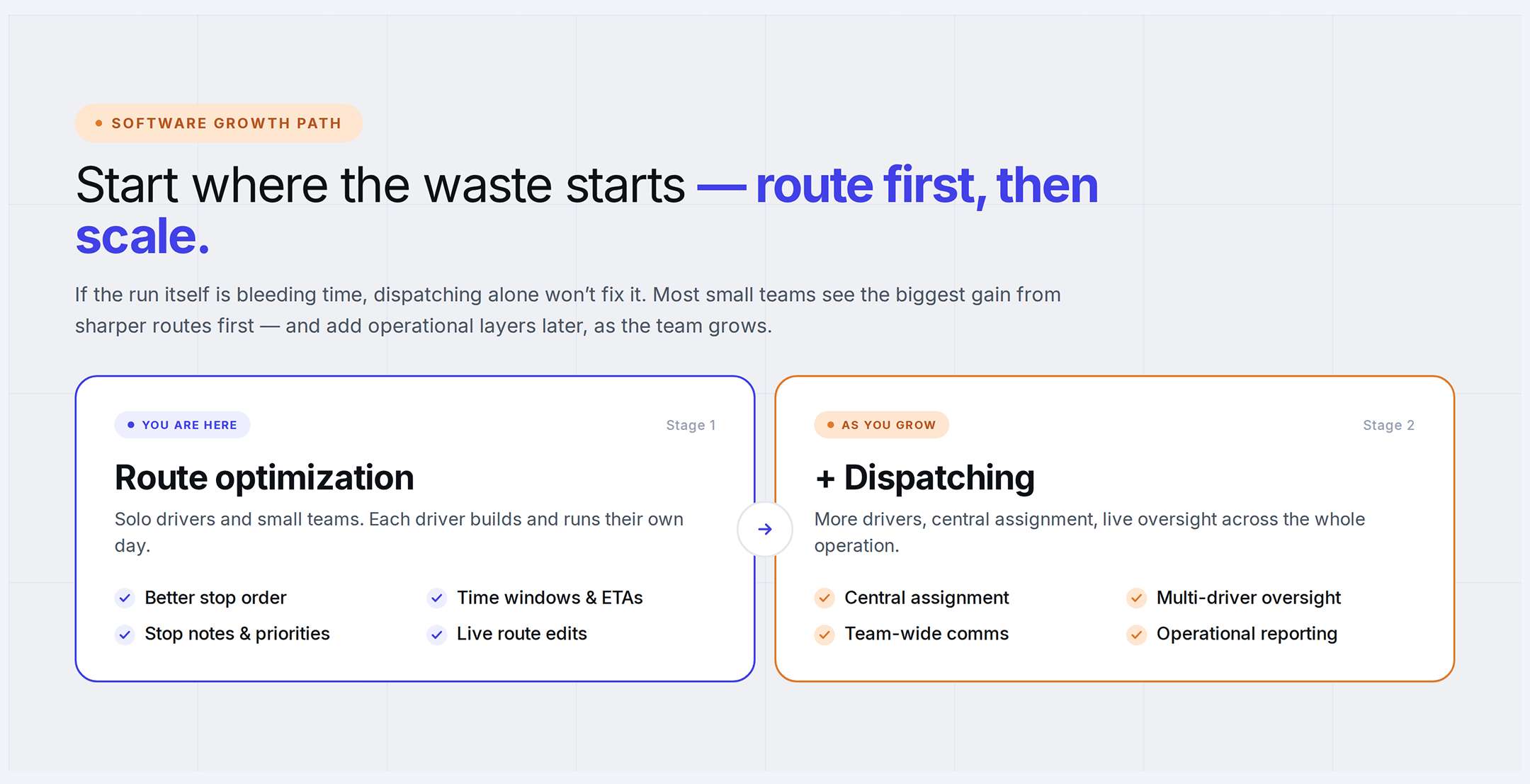
There does come a point where routing alone may no longer cover the full picture. As a business grows, coordination becomes more complex. More drivers, more centralized assignment, more live oversight, and more communication across the operation all increase the value of a stronger dispatch layer.
But that stage should not be confused with the first stage. If the problem today is that drivers are still building routes manually, losing time to poor stop order, switching between map apps, and struggling to keep runs on schedule, then route optimization is usually the sharper first step.
Optiway is built for exactly that stage. It helps businesses reduce wasted miles, improve stop order, stay closer to delivery windows, and make route planning faster and easier from day one.
The most honest answer to dispatching vs routing for a small delivery business is simple: start where the waste starts. If the route itself is inefficient, dispatching will not fix it. A business that already knows who is driving and mainly needs better sequencing, stronger timing, easier edits, and less wasted mileage will usually see more immediate value from route optimization first.
As delivery operations become more complex, broader software layers matter more. But for many small businesses, the first meaningful upgrade is not a larger management system. It is a better route. That is exactly where Optiway’s last-mile delivery route planner for 3PL providers and local logistics delivers value.
OptimoRoute Alternatives: Optiway vs OptimoRoute
A feature-by-feature comparison of pricing, analytics, dispatch and proof of delivery for growing delivery teams.
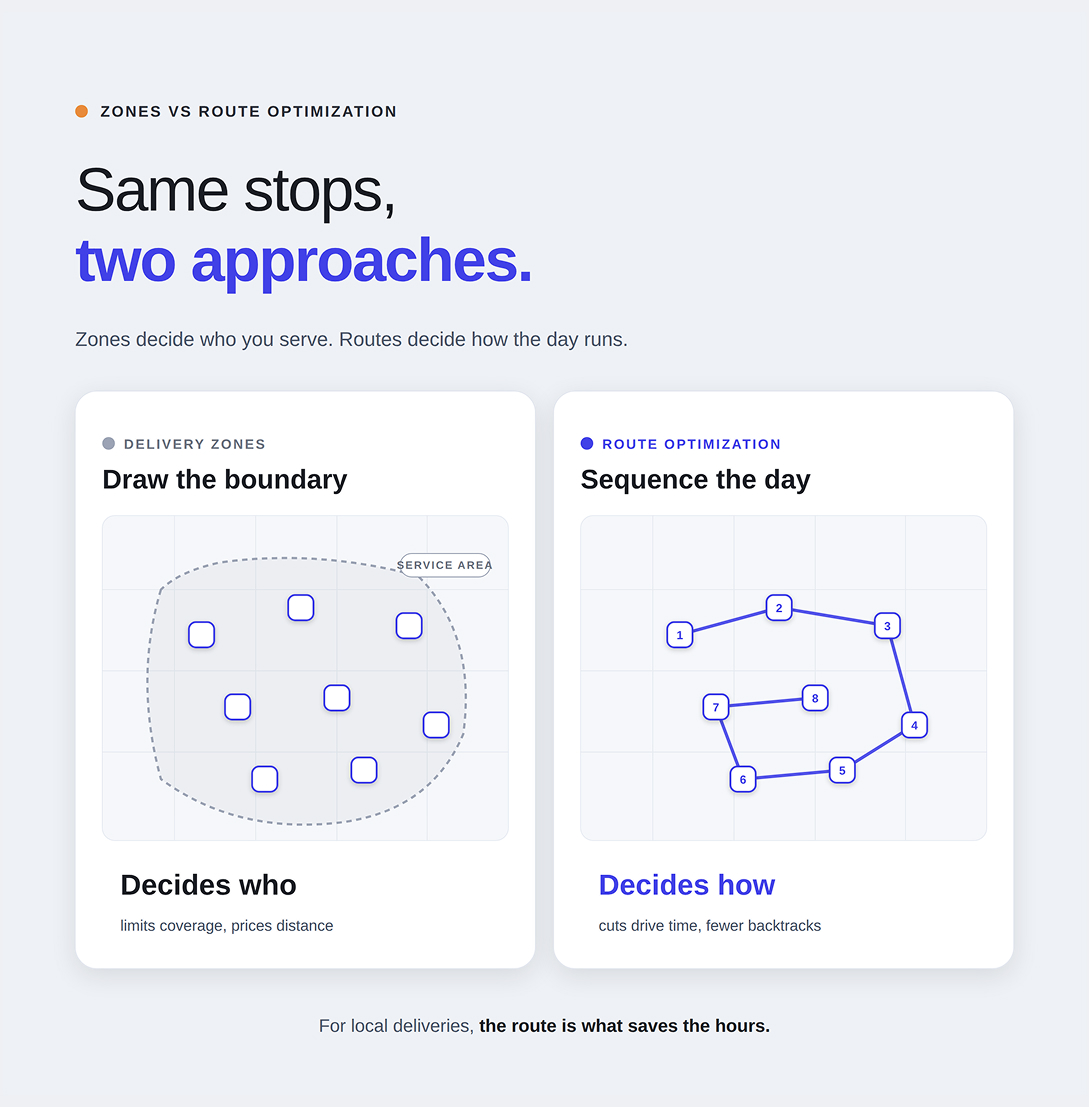
Delivery Zones for Small Business vs. Route Optimization: Which Saves More Time?
Optiway compares delivery zones with route planning and shows why cleaner sequencing, better timing, and fewer wasted miles often save more time for local deliveries.
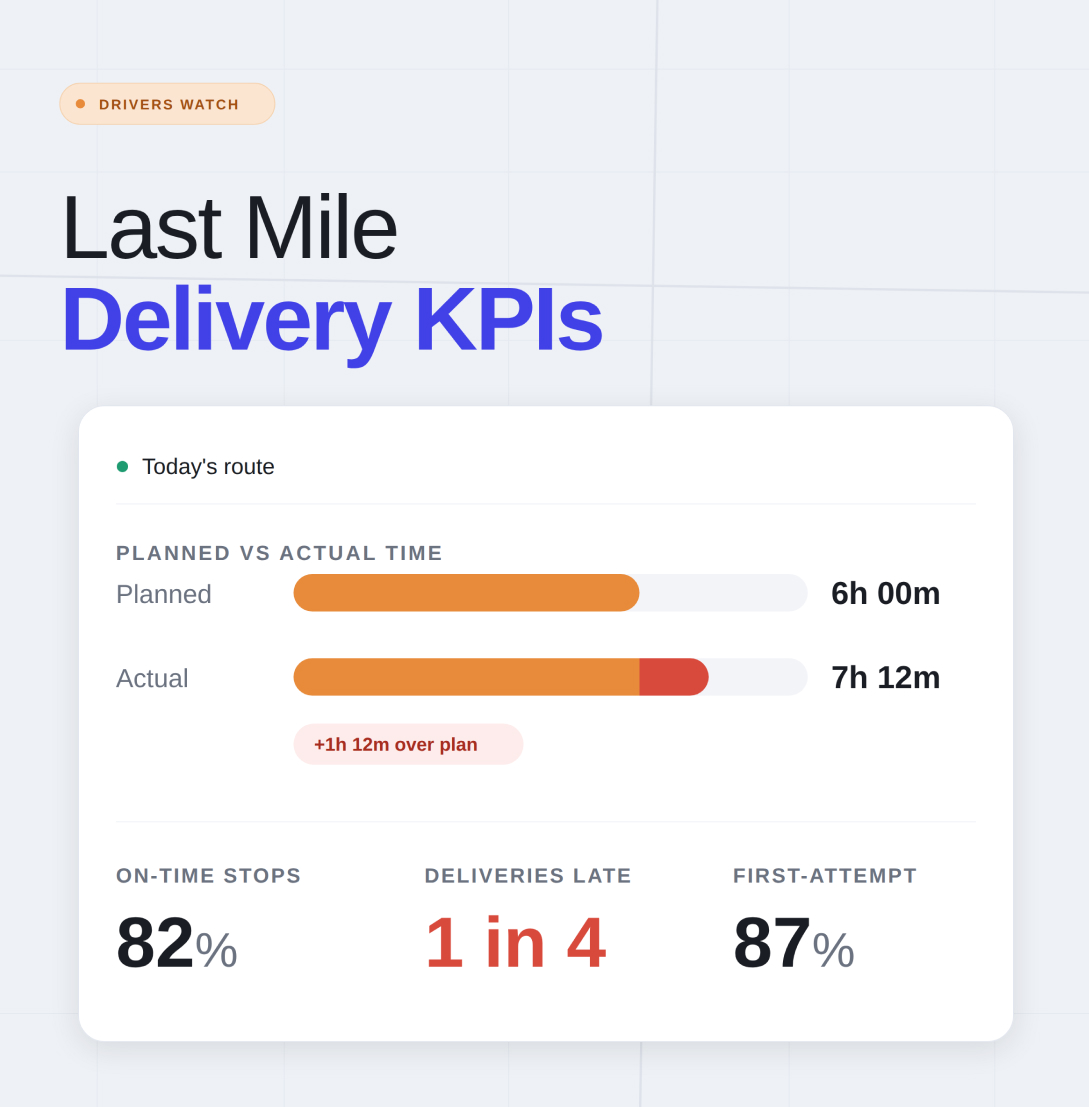
Last Mile Delivery KPIs for Route Optimization: What Drivers Should Actually Track
Optiway looks at last mile delivery KPIs drivers actually use to cut wasted miles, protect time windows, and keep each route calmer.
Plan, assign and track every driver — live, from one dashboard.