Best Delivery Route Planning Software for Small Delivery Businesses in 2026
Nine route planning tools compared on price for 3, 5 and 10 drivers, free plans and the catch.

Comparisons
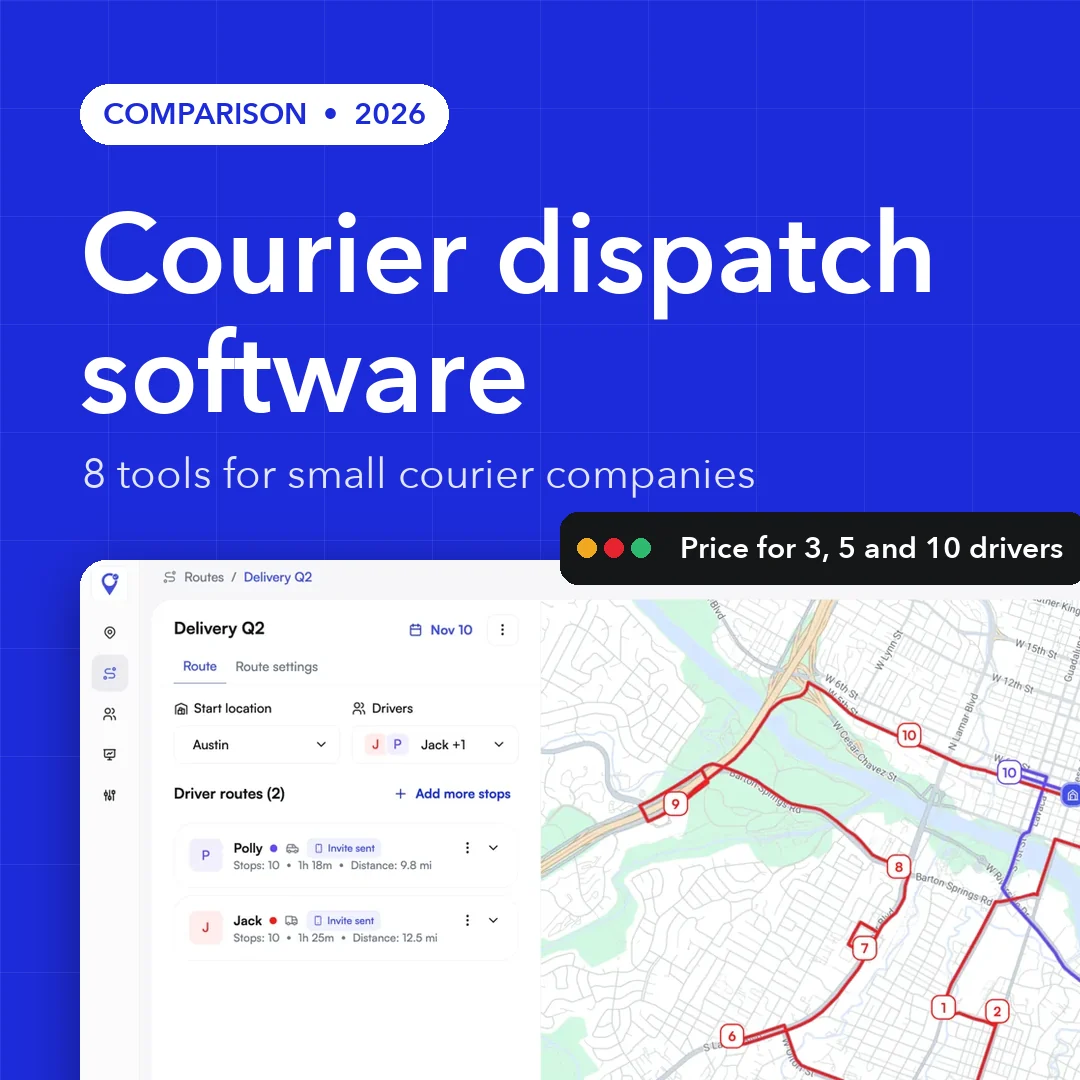
A small courier company usually runs dispatch on three things: a spreadsheet of tomorrow's stops, a group chat with the drivers, and one person who holds the whole day in their head. Courier dispatch software replaces the first two and takes the pressure off the third. This comparison covers eight tools a company with 3 to 10 drivers can actually buy in 2026, with what each one costs at your size.
Prices are US pricing from each vendor's own pages, checked on 16 November 2026 unless a section says otherwise.
| Tool | Kind of courier work | Free plan or trial | 5 drivers, 2,000 stops a month | How you pay |
|---|---|---|---|---|
| Optiway Dispatch | planned routes for a small courier company | free plan, 300 stops a month, no card | $99 | per stop, drivers free |
| Spoke Dispatch | planned parcel routes | 7-day trial, no free plan | $165 | per stop, drivers free |
| Shipday | orders dispatched as they arrive, plus routes | free plan, 300 orders a month | about $219 | plan plus a fee per order |
| Track-POD | planned routes with detailed proof of delivery | 7-day trial, no free plan | $295 | per driver, three-driver minimum |
| OnTime 360 | on-demand jobs with billing | 14-day trial | $499 | per shipment |
| Onro | on-demand jobs with customer ordering | free demo, no card | $239 plus extra deliveries | per delivery |
| Onfleet | both, at larger scale | demo on request | $619 | per task |
| CXT Software | on-demand and routed work with billing | demo on request | from $600 | quoted |
For a courier company with 3 to 10 drivers that runs planned routes, the best courier dispatch software is the one that charges for stops and lets you add every driver for free. Optiway Dispatch does that at $99 a month for 2,000 stops, and its free plan covers 300 stops a month with every feature. Spoke Dispatch is priced the same way at $125 for 1,000 stops.
Our pick for most small courier companies is Optiway Dispatch. It is ours, so we will say why plainly. You upload tomorrow's stop list, tick the drivers, click Optimize, and each driver gets a sequenced route in the app on their phone. You watch the day on a live map and move stops between drivers when something changes. Every plan includes every feature, and the price does not move when you add a driver for the December peak.
The others each win somewhere. Spoke on its driver app and customer notifications. Shipday on a free plan built around orders that arrive through the day. Track-POD on proof of delivery. OnTime 360, Onro and CXT Software on pricing and invoicing jobs. Onfleet on scale.
Vendors use one name, courier dispatch software, for two different products. Which one you need depends on when you learn about the work.
Route-based dispatch. You know the stops before the vans leave: a client's manifest, yesterday's orders, a standing pharmacy or lab run. The dispatcher's job is to split that list between drivers, put each route in the fastest order, send it to the phones and watch it happen. Optiway Dispatch, Spoke Dispatch and Track-POD are built for this, and people also search for them as courier route planning or courier routing software.
On-demand dispatch. The work arrives during the day. A customer phones or books through a portal, the system prices the job from its distance and service level, a dispatcher or an auto-dispatch rule gives it to the nearest free driver, and the job lands on an invoice at the end of the month. OnTime 360, Onro and CXT Software are built for this, and it is what most people mean by courier management software.
Shipday and Onfleet sit between the two: both plan routes and both dispatch orders as they arrive.
The quickest test is your invoice. If you bill a client a monthly rate or a price per stop for routes you plan yourself, you need route-based dispatch, and paying for order entry, rating tables and a customer portal buys you nothing. If every job has its own price and its own customer, you need the on-demand kind. We compared route-based tools beyond couriers in best delivery route planning software for small teams.
What courier dispatch software costs for five drivers and 2,000 stops a month, cheapest first: Optiway Dispatch $99, Spoke Dispatch $165, Shipday about $219, Onro $239 plus extra deliveries, Track-POD $295, OnTime 360 $499, CXT Software from $600, Onfleet $619. At that size Optiway Dispatch costs 40% less than the next tool, Spoke Dispatch, and 84% less than Onfleet.
Volume moves the price more than headcount does, so each column fixes both. Monthly billing, US pricing.
| Tool | Plan used | 3 drivers, 1,000 stops | 5 drivers, 2,000 stops | 10 drivers, 5,000 stops |
|---|---|---|---|---|
| Optiway Dispatch | Team, then Business | $99 | $99 | $199 |
| Spoke Dispatch | Starter plus extra stops | $125 | $165 | $285 |
| Shipday | Professional plus extra orders | about $119 | about $219 | about $519 |
| Track-POD | Advanced, month to month | $177 | $295 | $590 |
| OnTime 360 | Business, then Enterprise | about $312 | $499 | $1,099 |
| Onro | Business | $239 | $239 plus extra deliveries | ask sales |
| Onfleet | Launch, then Scale | $619 | $619 | $1,349 |
| CXT Software | starting rate | from $600 | from $600 | quoted |
How the numbers are built. Optiway Dispatch, Spoke and Onro include unlimited drivers, so only volume counts. Spoke's Starter is $125 for 1,000 stops and $0.04 for each stop above that. Shipday prices merchants and delivery companies separately; for a delivery company its Professional plan is $49 a month with 300 orders included, unlimited drivers and $0.10 for each order above that. Track-POD's Advanced is $59 per driver month to month with a three-driver minimum. OnTime 360 includes 750 shipments on Business ($249, then $0.25 each) and 2,000 on Enterprise ($499, then $0.20 each), plus a one-time onboarding fee of $99 to $249. Onro's Business plan includes 1,500 deliveries and its page does not publish the rate above that. Onfleet's Launch includes 2,500 tasks and Scale 5,000.
One caution on the on-demand tools: a shipment or a delivery is a job, and a job often has a pickup and a drop. If your work is multi-stop routes, count stops; if it is point-to-point jobs, count jobs. The columns above treat one stop as one unit so the tools can be compared at all.
Yes. Two of the eight have a free plan that does not expire. Optiway Dispatch is free up to 300 stops a month with every feature, unlimited drivers and dispatchers, and no card. Shipday is free up to 300 orders a month with 10 driver accounts and one dispatcher account; route optimization starts on its paid plans.
The rest offer a trial or a demo: 7 days at Spoke and Track-POD, a 14-day trial listed at OnTime 360, a free demo without a card at Onro, and a demo on request at Onfleet and CXT Software.
300 stops is a busy day or a quiet week for a three-van company. That is enough for the only test that matters: take yesterday's real list, upload it, split it, send the routes to two drivers and see whether the afternoon goes better than it did by group chat. We go through what free plans leave out in free dispatch software for delivery teams.
Optiway Dispatch is free for 300 stops a month on the Early Access plan, $99 a month for 2,000 stops on Team and $199 for 5,000 on Business. Every plan includes every feature, unlimited drivers and unlimited dispatchers; above 5,000 stops a month the plan is arranged with sales. No card to start. Drivers run their routes in the Optiway Route Planner app on iOS and Android, and the company's plan covers it, so drivers pay nothing.
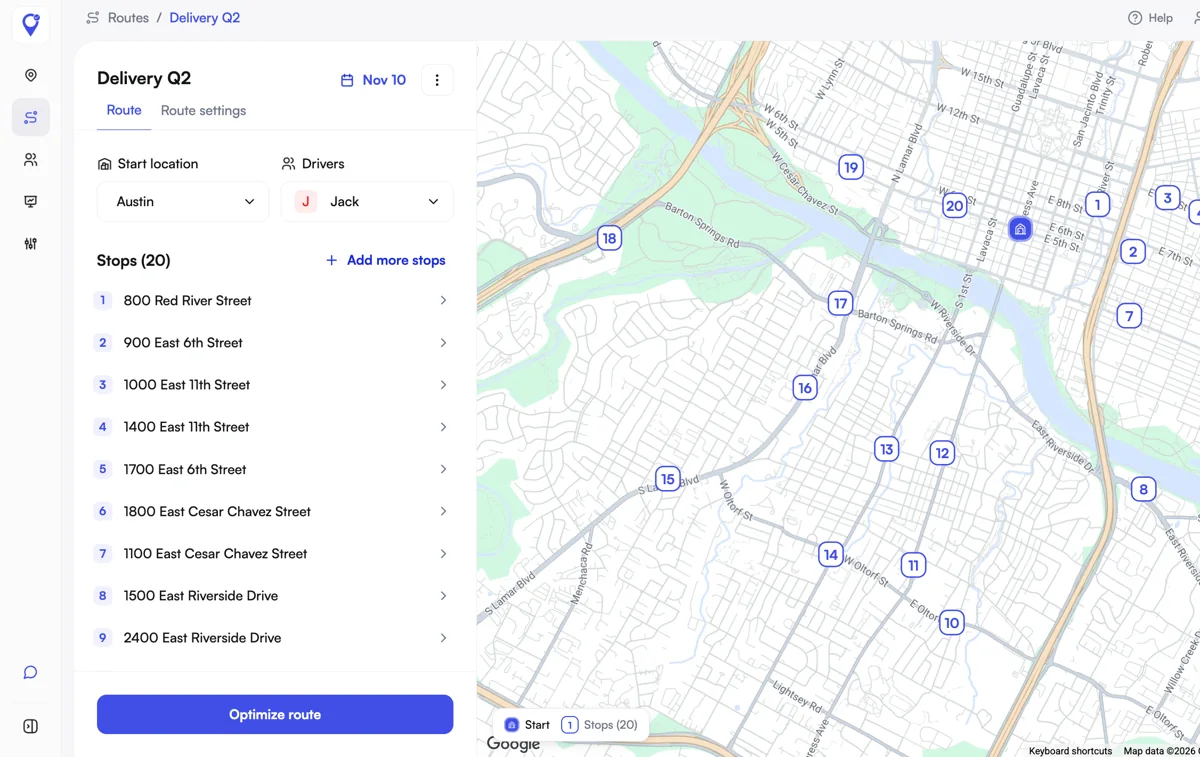
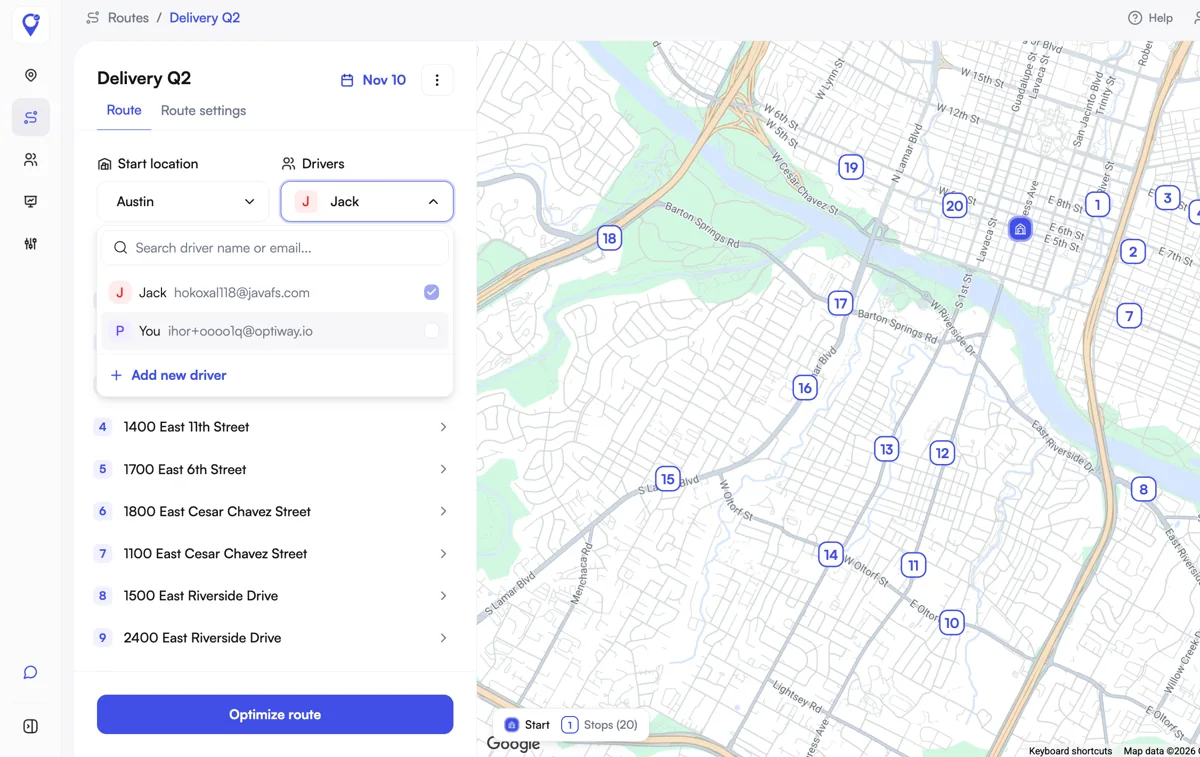
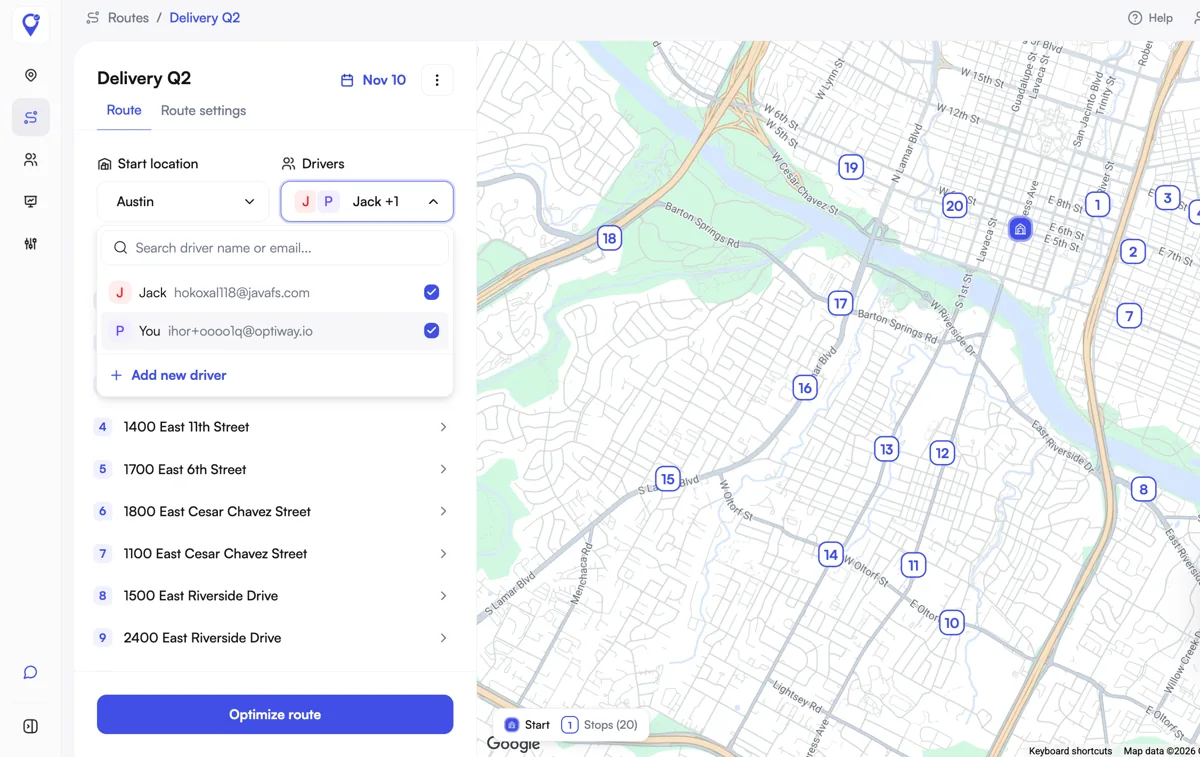
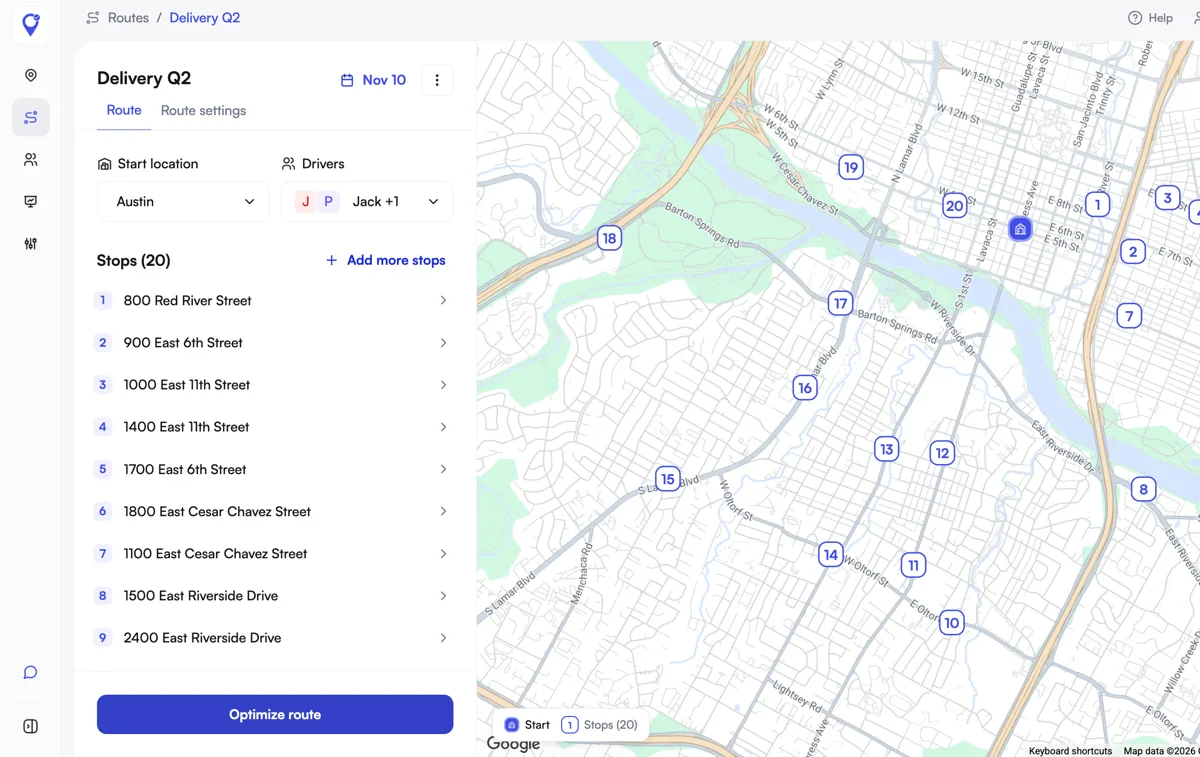
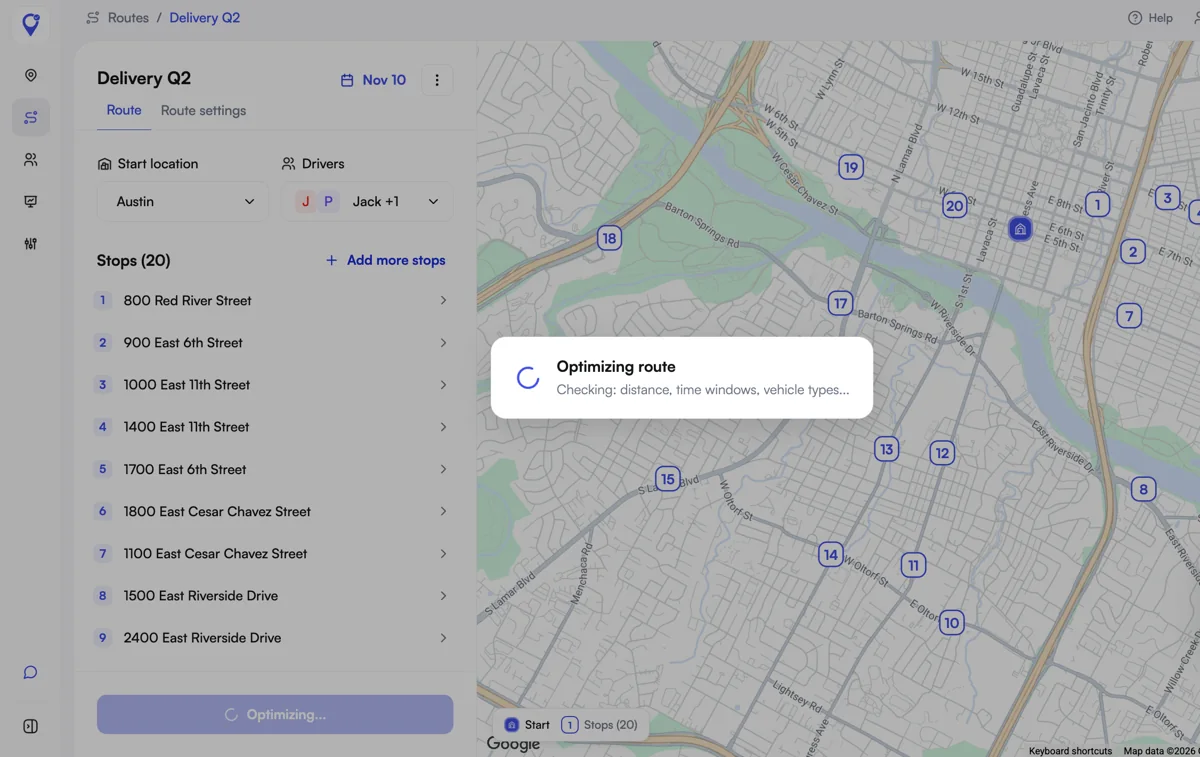
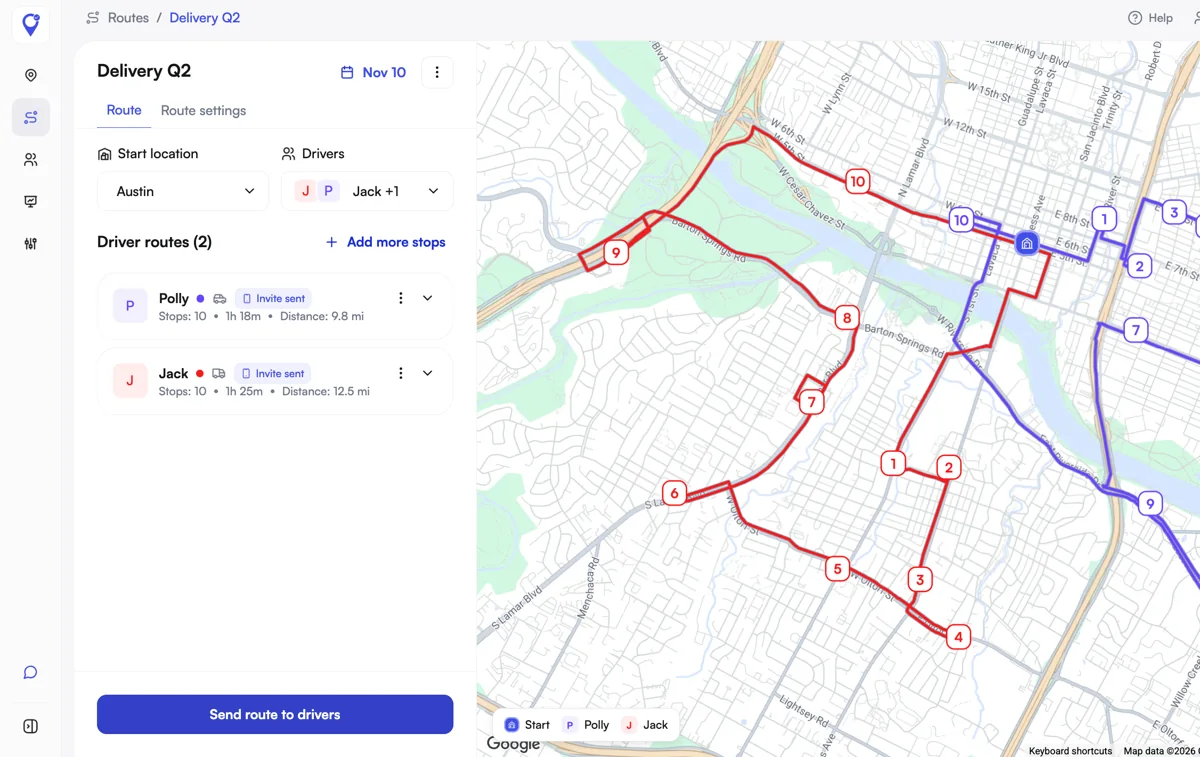
Yes, this one is ours. Here is what it does well for a courier company, and a free plan to check every word on your own stop list.
Where Optiway wins. The price does not grow with the team. Three drivers or ten, a quiet February or a December peak with two hired vans, the bill follows your stops and nothing else. Setup takes minutes: add a driver with a name and an email, the driver accepts the invitation in the app, and from then on routes arrive on their phone.
The planning side is built for a manifest. Import a csv, xls or xlsx file, set time windows, pickups, priorities and how long a stop takes, and Optiway splits the list between the drivers you tick and sequences each route, up to 200 stops per route. Each driver can have a vehicle type, from bike to big truck, and the optimizer respects it. You choose fastest, shortest or balanced per route, and a company with more than one base can keep several depots in one workspace.
Then the day changes, and the board keeps up. Move stops from one driver to another, hand a whole route to a different driver when someone calls in sick, reorder by hand where you know the street better than the map, or make any stop the next one.
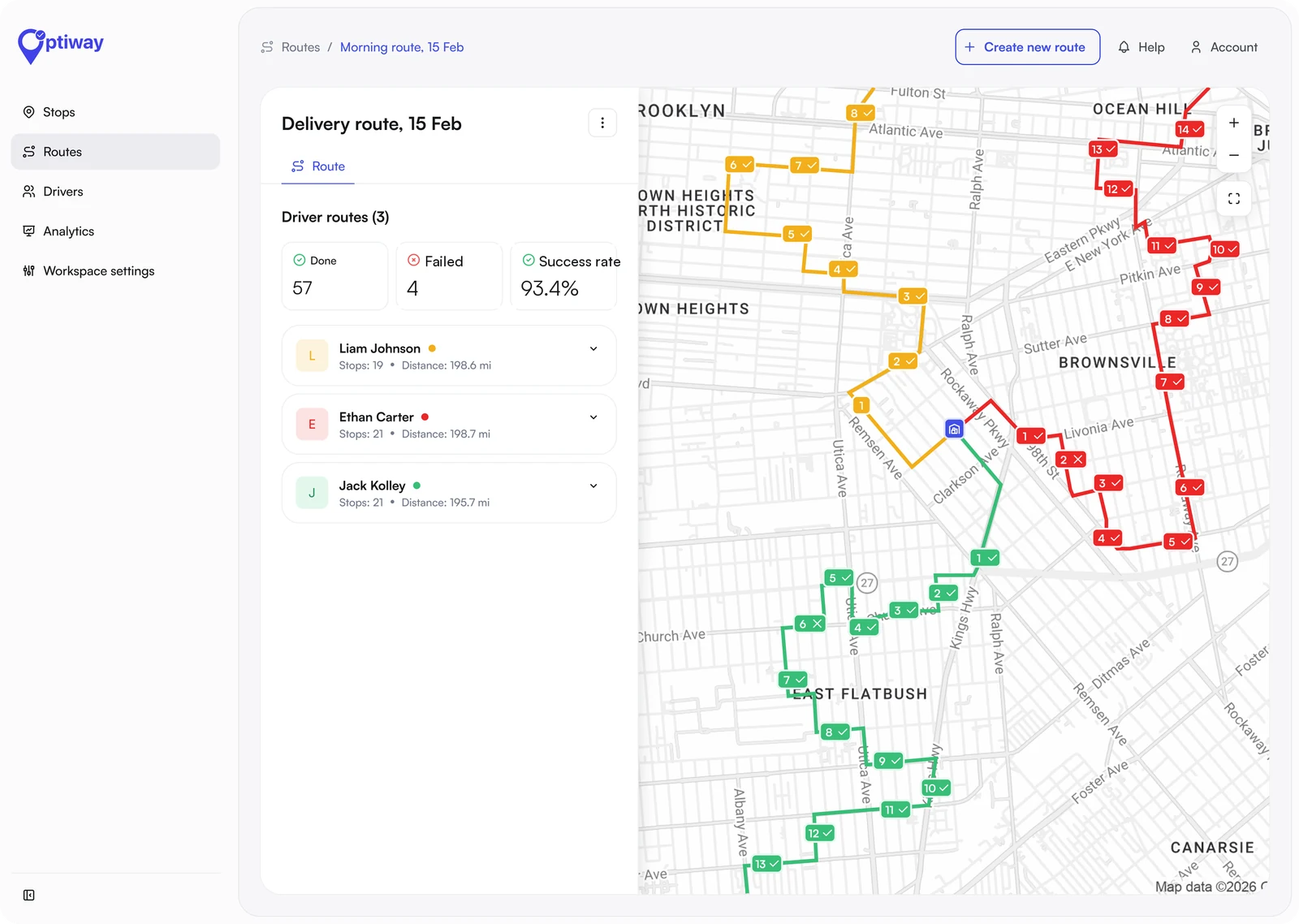
Drivers confirm each stop with a photo, a signature or a note, and you can require proof on the stops that need it. The live map shows where every driver is, and analytics give you on-time rate, failed deliveries and a per-driver table for any period. More on the courier setup in courier dispatch software for small business.
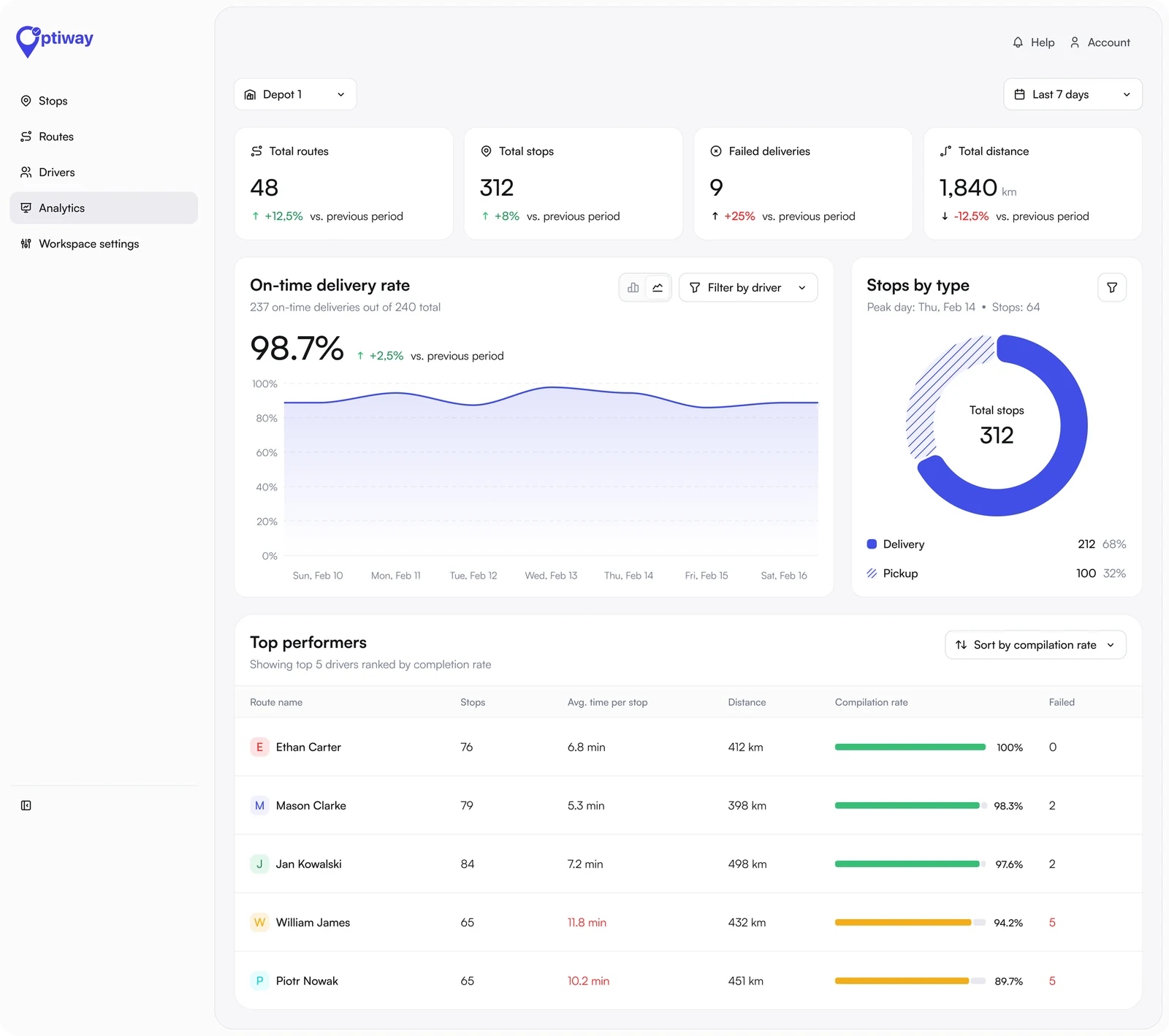
Free: 300 stops a month on Early Access, with as many drivers and dispatchers as you like. The plan does not expire.
Where it falls short: Optiway plans and runs routes; it does not price jobs or invoice your clients. There is no public API or store integration yet, so orders come in as a file, and connections to other systems are set up on request. Customers do not get an ETA text or a tracking link yet, and proof of delivery is a photo, a signature or a note, without barcode scanning.
Spoke Dispatch, formerly Circuit for Teams, costs $125 a month for 1,000 stops on Starter, $200 for 2,000 on Premium and $1,000 for 12,000 on Expert. Drivers are unlimited on every plan, and extra stops cost $0.04 to $0.07 each.
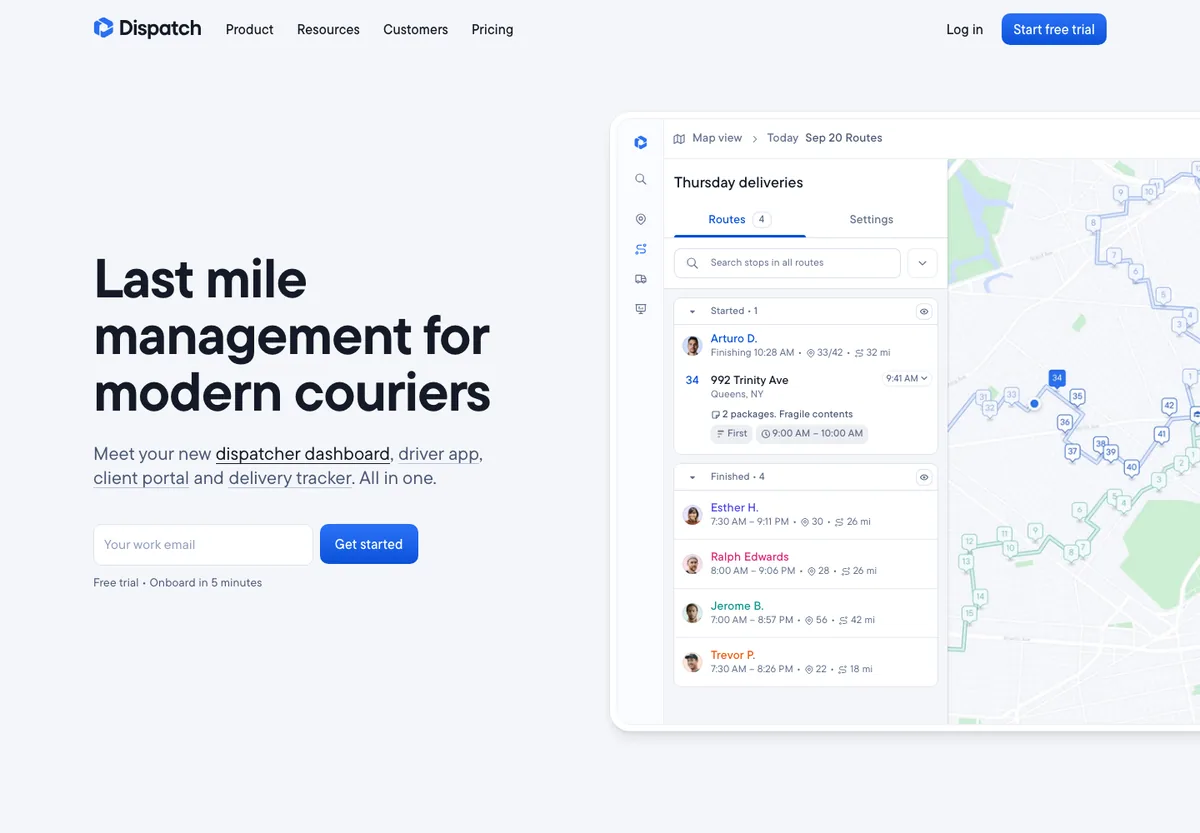
Best for: a parcel courier whose customers expect a text and a tracking page. Every plan includes SMS and email notifications, a recipient tracking page, barcode scanning, and proof of delivery by signature and photo; Premium adds a branded tracking page.
Free: no free plan. A 7-day trial.
Where it falls short: the entry price buys half the stops Optiway's Team plan does, and there is no free plan to run on a real week. SMS is billed on top, per message. In our 4 November check Starter kept 30 days of history.
Shipday's Basic plan is free for up to 300 orders a month, with 10 driver accounts and one dispatcher account. Its pricing page has separate plans for merchants and for delivery companies. For a delivery company, Professional is $49 a month with 300 orders included, unlimited drivers and $0.10 for each order above that; higher plans run from $99 to $399 a month with their own allowances.
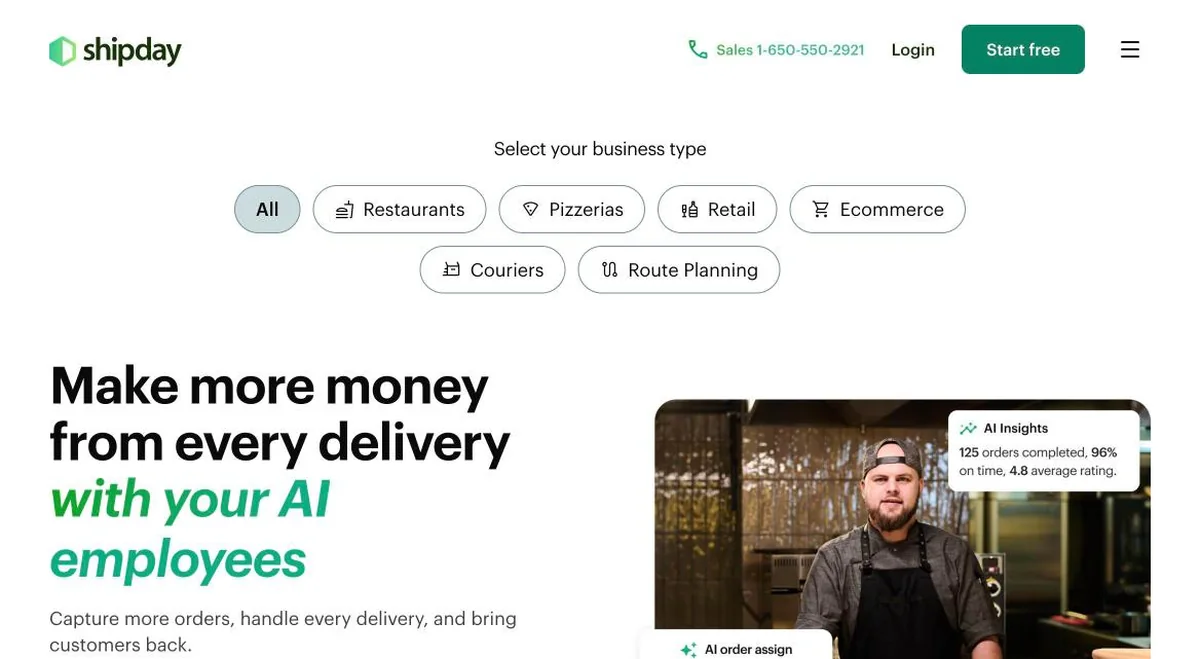
Best for: a local delivery company whose orders come in during the day from shops and restaurants. Live tracking for the customer and proof of delivery with a photo and a signature are on the free plan, and auto-dispatch starts on the paid ones.
Free: 300 orders a month, 10 driver accounts, one dispatcher.
Where it falls short: route optimization is not on the free plan. The paid plans add a charge for every order above 300, so the bill climbs quickly with volume: about $219 a month at 2,000 orders and about $519 at 5,000.
Track-POD charges per driver with a three-driver minimum. Advanced is $49 per driver a month billed yearly or $59 month to month, Advanced Plus $69 or $79, Ultimate $89 or $99. Five drivers on Advanced are $295 a month. Per-order plans with unlimited drivers also exist, from $510 a month for 3,000 orders.
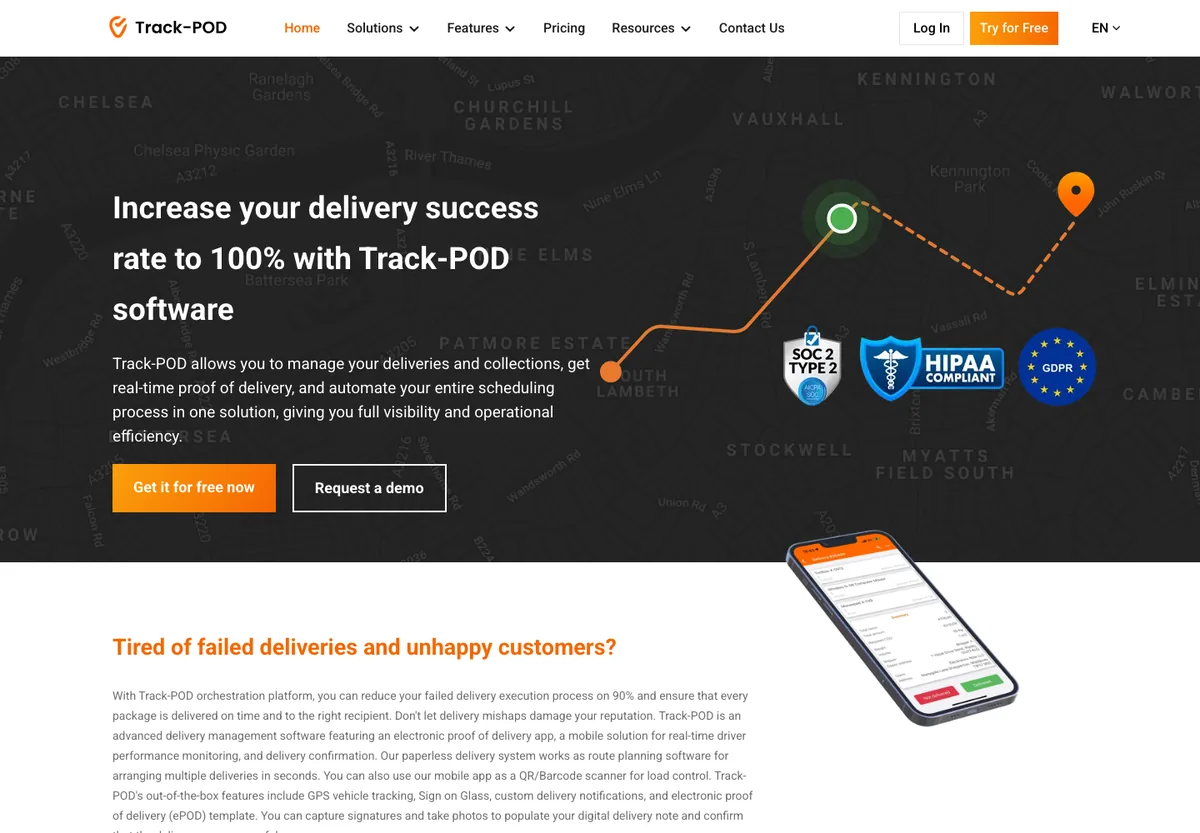
Best for: a courier whose contracts depend on proof of delivery: pharmacy, wholesale, anything signed for. Track-POD's proof of delivery goes further than the rest here, with barcode and QR scanning alongside signatures and photos.
Free: a 7-day trial. No free plan.
Where it falls short: the three-driver minimum means a two-van company pays for three seats, and per-driver billing reaches $590 a month at ten drivers.
OnTime 360 charges per shipment. Core is $49 a month with 100 shipments, Team $99 with 250, Business $249 with 750 and Enterprise $499 with 2,000. Extra shipments cost $0.35 down to $0.20 each depending on the plan, users are unlimited, and each plan has a one-time onboarding fee of $99 to $249. There are no contracts.

Best for: a same-day courier that prices and invoices each job. Billing and invoicing are included from the Business plan, a customer web portal starts on Team, and Business adds an API.
Free: a 14-day trial.
Where it falls short: the allowances are small for multi-stop work. A courier doing 2,000 stops a month lands on the $499 plan, five times Optiway's price for the same volume, because the product is built around individual jobs, not routes.
Onro's Business plan costs $239 a month and includes 1,500 deliveries, with no limit on users or drivers. Enterprise is priced on request. The page does not publish a rate for deliveries above the allowance.
Best for: a courier that wants customers to book jobs themselves. The Business plan comes with a driver app, a dispatcher panel, a customer API and a white-label tracking page; Enterprise adds a white-label customer portal and customer and driver apps under your own brand.
Free: a free demo with no card and no time limit.
Where it falls short: one plan and then a sales call. There is no smaller plan for a company doing a few hundred jobs a month, and you cannot work out the cost of a busy month from the pricing page.
Onfleet starts at $619 a month on Launch with 2,500 tasks, $1,349 on Scale with 5,000 tasks, and about $3,099 on Enterprise. Extra deliveries are billed per task and users are unlimited. A Courier Suite add-on started at $299 a month in our 4 November check.
Best for: a courier company that has outgrown small-team tools and has someone to work with an API. Every plan includes recipient texts and a branded live tracking page; Scale adds barcode scanning and auto-dispatch for on-demand orders.
Free: no free plan; a demo on request.
Where it falls short: price. A three-van courier doing 1,000 stops pays for 2,500 tasks, about six times Optiway's Team plan. We compare the two in detail in Optiway vs Onfleet.
CXT Software lists a starting rate of $600 a month and quotes its higher tiers.
Best for: an established courier, often medical, lab or pharmacy, that runs on-demand and scheduled work together and bills clients on contracts. It covers order entry with recurring orders, drag-and-drop dispatch, route optimization, invoicing and contract billing, a client portal and a driver app with barcode scanning.
Free: a demo on request.
Where it falls short: it is a system for a company with a billing clerk and a dispatch desk. For three vans on planned routes, most of what you pay for stays switched off.
Switching feels risky because dispatch cannot stop for a day. It does not have to. Run the new tool beside the old routine for a week and drop the old one when the new one has survived a bad day.
On Optiway Dispatch, days one to four fit inside the free plan's 300 stops. If the full day on Friday takes you past it, the Team plan is $99 for the month, and drivers pay nothing for the app either way.
Four questions settle it for most small courier companies. Answer them before you open a trial.
Then run one real day on a free plan or a trial, with your own addresses, before you pay anyone.
Courier dispatch software takes a courier company's stops or jobs, assigns them to drivers, puts each driver's work in order and shows the dispatcher where every driver is. Route-based tools such as Optiway Dispatch and Spoke Dispatch plan a known list of stops. On-demand tools such as OnTime 360, Onro and CXT Software take jobs as customers book them, and also price and invoice each one.
For a courier company with 3 to 10 drivers running planned routes, the best courier dispatch software is Optiway Dispatch: free up to 300 stops a month, $99 a month for 2,000 stops, with unlimited drivers and every feature on every plan. Spoke Dispatch ($125 for 1,000 stops) is priced the same way. A courier that prices and invoices each job should look at OnTime 360 or CXT Software.
For five drivers and 2,000 stops a month, courier dispatch software costs from $99 to about $620 a month: Optiway Dispatch $99, Spoke Dispatch $165, Shipday about $219, Onro $239 plus extra deliveries, Track-POD $295, OnTime 360 $499, CXT Software from $600 and Onfleet $619. Optiway Dispatch is the lowest price at this size, 40% below the next tool, and it does not change when you add drivers.
Two tools have a free plan that does not expire. Optiway Dispatch is free up to 300 stops a month with every feature and unlimited drivers, and needs no card. Shipday is free up to 300 orders a month with 10 driver accounts, without route optimization. Spoke, Track-POD and OnTime 360 offer trials of 7 to 14 days.
For a small courier business, the lower-priced alternatives to Onfleet ($619 a month) and Spoke Dispatch ($125 a month) are Optiway Dispatch, free up to 300 stops and $99 a month for 2,000, and Shipday, free up to 300 orders. Both include a driver app and proof of delivery. Track-POD is the alternative when barcode scanning matters most.
Yes. Every tool in this comparison sends routes or jobs to a driver app on the courier's phone, and the company's plan covers it. Optiway drivers use the Optiway Route Planner app on iOS and Android: the dispatcher adds a driver by email, the driver accepts the invitation in the app, and drivers pay nothing.
The driver confirms each stop in the app, and the record is saved against that stop for the dispatcher to see. In Optiway Dispatch the proof is a photo, a signature or a note, and the dispatcher can require it on chosen stops. Track-POD, Spoke Dispatch and Onfleet's Scale plan add barcode scanning for couriers that need a scan as well.
For most courier companies with 3 to 10 drivers on planned routes, the best courier dispatch software is Optiway Dispatch. The free plan survives a real day with your own stops, never expires and needs no card. Add your drivers by email, upload the manifest, send the routes to their phones, watch the day on the map and move a route to another driver when someone drops out. At five drivers and 2,000 stops a month it costs $99, 40% less than the next tool in this comparison. It is ours, and the free plan is there so you can check all of this yourself.
The others each have a case. A text and a tracking page for every recipient: Spoke Dispatch at $125. Orders that arrive all day and a free plan to start on: Shipday. Proof of delivery with a scan: Track-POD. Every job priced and invoiced: OnTime 360 from $49, or CXT Software once you have a billing desk. Customers booking their own jobs: Onro. More than ten drivers and an API: Onfleet.
Whichever you choose, count your stops for a month before you look at a price list. That one number puts you in the right column of the table above.
Four criteria, applied to Optiway as well. The tool has to be sold to courier or local delivery companies, not only to enterprise fleets. It has to work for a dispatcher plus 3 to 10 drivers. It has to publish at least a starting price, so the cost at 3, 5 and 10 drivers can be worked out; where a page stops short, as with Onro above its allowance and CXT Software above its starting rate, we say so. And the list had to cover both kinds of courier work, routes and on-demand jobs, because a comparison of only one kind sends half its readers to the wrong product.
Prices for all eight tools were read on each vendor's own pricing page on 16 November 2026. Onfleet's Courier Suite figure, Track-POD's trial length and Spoke's data history come from our 4 November 2026 check. Shipday publishes one set of plans for merchants and another for delivery companies; we used the delivery company figures and marked the results as approximate. We did not run identical routes through all eight tools, so this is a comparison of published prices, plans and features, not a benchmark. Prices change: check the vendor's page before you buy.
Best Delivery Route Planning Software for Small Delivery Businesses in 2026
Nine route planning tools compared on price for 3, 5 and 10 drivers, free plans and the catch.
Optiway vs Onfleet: Features & Pricing Compared
See how Optiway compares to Onfleet for growing delivery fleets.

Free Dispatch Software for Delivery Teams
What a free dispatch plan covers, where it runs into limits, and what to check before you pick one.
Plan, assign and track every driver — live, from one dashboard.